What is Baobab?
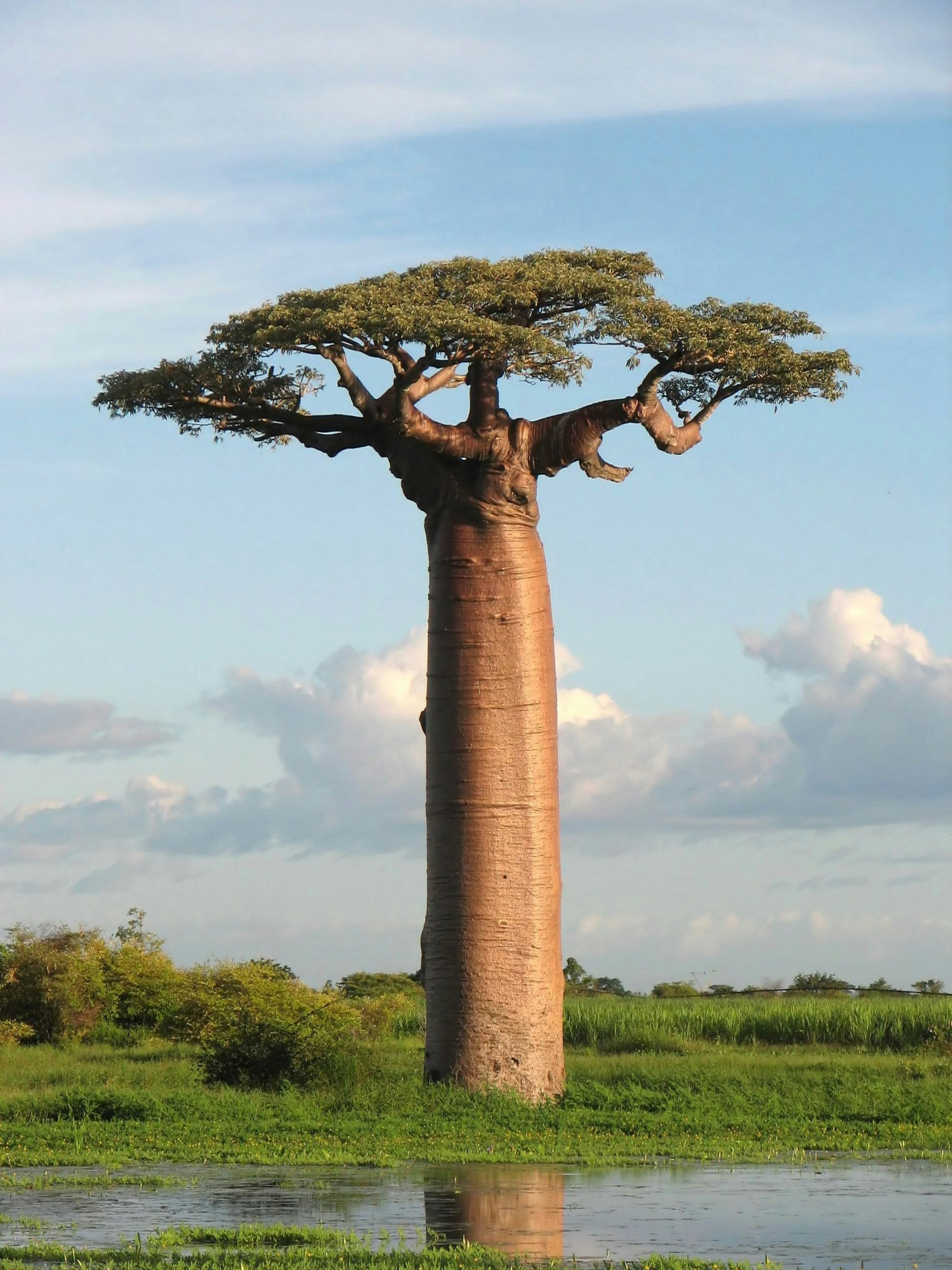
Baobab (Adansonia digitata) is the fruit of the iconic baobab tree, primarily found in the dry savannas of Africa. With its thick trunk and gnarled branches, the tree appears to be planted upside down. The baobab is truly a tree of life: its leaves, bark, fruits, and seeds have been used for centuries in African cuisine and medicine.
Nutritional Value & Function
The pulp naturally dries within the pod, eliminating the need for heating or artificial processing. The powder is packed with:
-
Up to 50% fiber, much of which is soluble.
-
Vitamin C in amounts up to six times higher than in oranges.
-
Potassium, calcium, and magnesium that contribute to healthy blood pressure and strong bones.
-
Antioxidants that help neutralize free radicals.
Science
Research shows that baobab:
-
Helps stabilize blood sugar by slowing down sugar absorption in the intestine.
-
Acts prebiotically: the soluble fibers provide nourishment for beneficial bacteria in the large intestine.
-
Provides antioxidant protection, which inhibits low-grade inflammation.
-
Increases satiety and thus can contribute to weight management.
Why We Use It
For me, baobab symbolizes more than just an ingredient. It represents authenticity and purity: precisely the values I want to incorporate into Nativ. By adding baobab to our mixes, they not only gain extra fiber and nutrients but also a unique, fresh touch not easily found in other baking mixes.
When I discovered baobab, I was surprised by how powerful this ingredient is and how much it contributes to gut health and energy. It fit perfectly into our story of 'ancient ingredients', clean label, and functional food.
Fun Fact
In Africa, the baobab is also called the tree of life. For many villages, the tree is literally a source of food and medicine.
Source: Chadare FJ et al. (2009). Baobab food products: a review. Critical Reviews in Food Science and Nutrition